


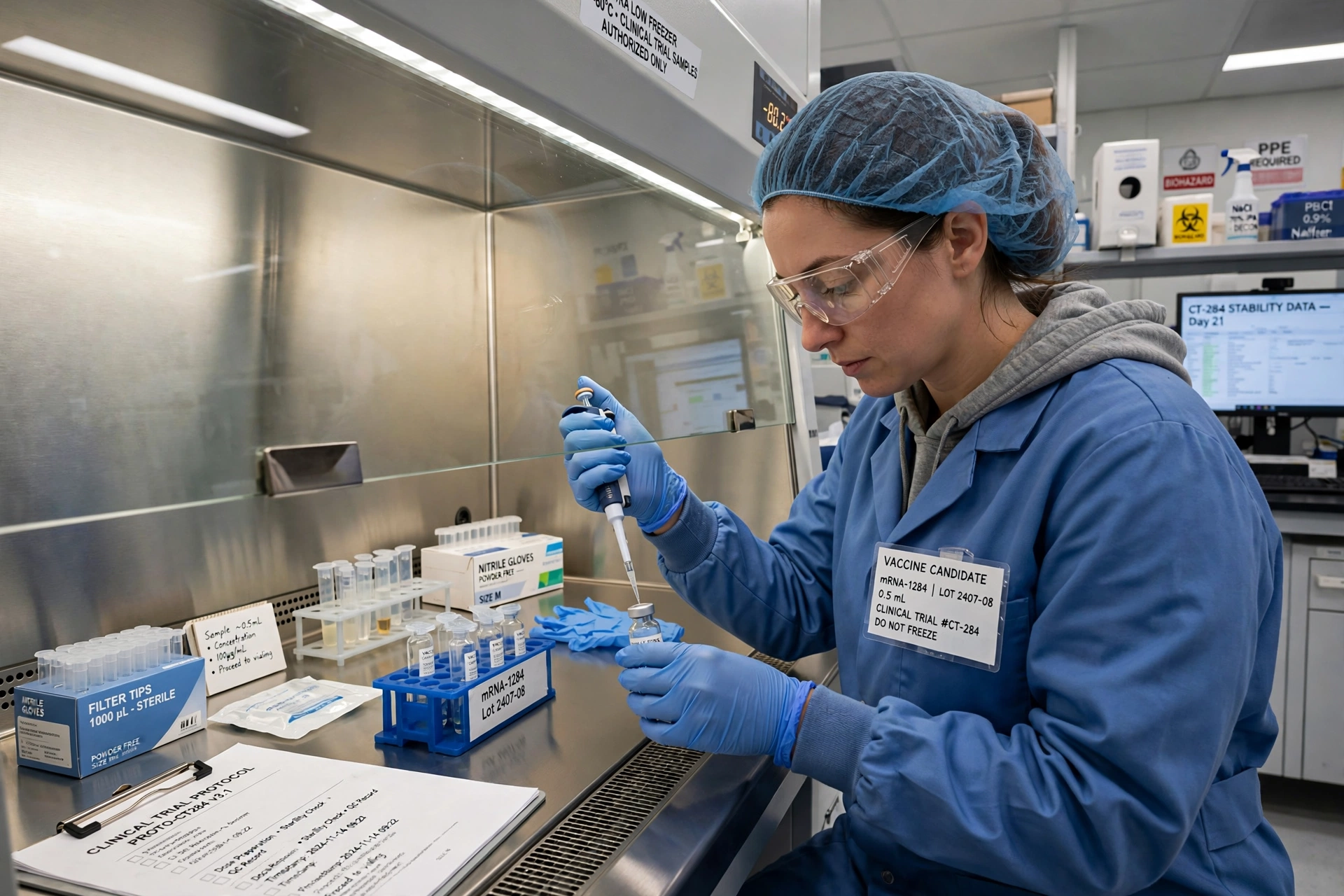
A personalised cancer vaccine designed for each patient’s own tumour has passed an early safety test in women with ovarian cancer, in a small phase 1 trial published in Nature Medicine. The vaccine, called NeoVax, was combined with the immunotherapy drug nivolumab and was found to be feasible to manufacture and administer, with an acceptable safety profile.
The researchers are careful to stress what this study was — and what it was not. Phase 1 trials are designed primarily to test safety and practicality, not to prove that a treatment works. No conclusions about survival or long-term benefit can be drawn from results at this stage.
How a personalised vaccine is made
NeoVax belongs to a class of treatments built around neoantigens: abnormal protein fragments produced by mutations in a patient’s cancer cells and found nowhere else in the body. Because these fragments are unique to the tumour, they can act as a highly specific target for the immune system.
For each participant, scientists sequenced the DNA of tumour and healthy tissue, used algorithms to predict which neoantigens the immune system was most likely to recognise, and then manufactured a bespoke vaccine containing up to 20 of those targets. The process is complex and time-consuming, which is why demonstrating that it can be done reliably, patient after patient, is itself a meaningful result.
Why ovarian cancer, and why this group of patients
The trial enrolled patients with platinum-sensitive ovarian cancer — disease that had previously responded to platinum-based chemotherapy. Ovarian cancer is often diagnosed late and frequently returns after treatment, so researchers are keen to find therapies that might help the immune system keep residual disease in check.
Combining the vaccine with nivolumab, a checkpoint inhibitor that releases a brake on immune cells, is intended to give the vaccine-primed immune response a better chance of acting. Early immunological analyses in the study suggested the treatment could provoke measurable immune responses, though such signals are preliminary by nature.
As with a major trial of glucose monitors in type 2 diabetes, the gap between an encouraging early result and a proven therapy is bridged only by larger, longer trials.
What happens next
The findings support moving the approach into bigger randomised studies, where the vaccine combination would be compared against standard care and judged on outcomes that matter to patients. Manufacturing speed and cost remain major hurdles for all personalised vaccines: a treatment built individually for every patient is far harder to scale than a drug made in bulk.
For now, specialists describe the result as a solid, necessary first step. The trial shows the vaccine can be made, delivered alongside an established immunotherapy and tolerated by patients — the foundation on which any future proof of benefit will have to be built.
How patients experienced the treatment
For the women who took part, participation meant considerably more than receiving an injection. Each patient’s journey began with tumour sampling and sequencing, followed by a manufacturing wait while her vaccine was designed and produced. Alongside the vaccinations, participants received nivolumab infusions and attended regular monitoring visits at which blood samples were taken to track immune responses and watch for side effects.
The side effects reported were consistent with what doctors expect from checkpoint immunotherapy and vaccination: fatigue, injection-site reactions and flu-like symptoms were among the effects described, alongside the immune-related complications that nivolumab is known to cause in a minority of patients and which trial teams are trained to detect early. The researchers judged this overall profile acceptable for a population already familiar with the demands of chemotherapy.
Patient advocates note that trials like this also generate knowledge beyond the headline result. The immune-monitoring data collected — which neoantigens provoked responses, how strong those responses were, and how long they lasted — will inform the design of the next generation of vaccine studies, in ovarian cancer and beyond. Even a safety trial, carefully conducted, leaves the field better equipped than it found it.
