


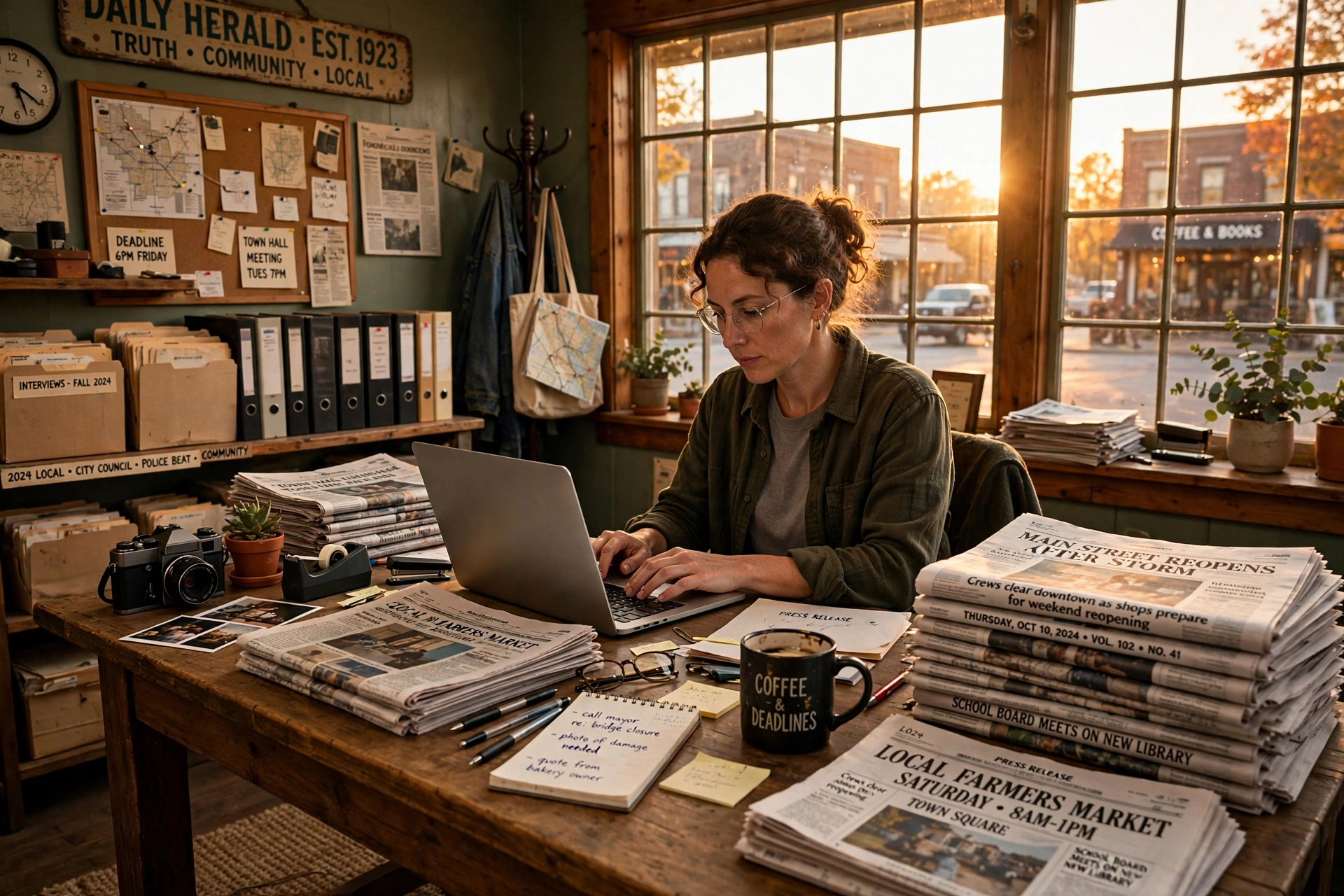
A decade ago, the obituary of local journalism seemed all but written. Regional papers were closing by the hundreds, newsrooms were hollowed out, and social media feeds had replaced the morning paper as the place where communities learned what was happening on their own streets. Yet in 2026, something unexpected is happening: local news is quietly coming back.
From small-town weeklies launching paid newsletters to city papers rebuilding their reporting teams, community journalism is enjoying its strongest revival in years. Readers who once scrolled past are subscribing again, and at Journal News Info we see the same pattern in our own audience: stories about councils, schools, local business and neighbourhood life consistently outperform generic national coverage.
Why Local News Faded in the First Place
The collapse was never really about readers losing interest. It was about money. Classified advertising migrated to free online platforms, print circulation fell, and large chains cut reporting jobs to protect margins. Fewer reporters meant thinner papers, and thinner papers gave readers less reason to pay. Research from the Reuters Institute for the Study of Journalism has repeatedly shown that when local coverage disappears, civic participation drops with it: fewer people vote in local elections, and fewer officials are held to account.
The pandemic years accelerated the damage, but they also exposed the cost of the decline. When a genuine local emergency arrived, many communities discovered that the fastest information came from rumour-filled group chats rather than from any verified source. That experience changed how many readers value a newsroom they can actually call.
What Is Different This Time
The comeback is being built on a different business model. Instead of chasing vast audiences for advertisers, surviving local outlets are asking smaller audiences to pay directly. Digital subscriptions, memberships and community fundraising now fund a growing share of local reporting. Non-profit newsrooms and journalist-owned cooperatives have filled gaps in towns the big chains abandoned.
Trust is the other engine. Surveys by the Pew Research Center consistently find that local journalists are trusted far more than national media figures, largely because readers can see the results of their work: the pothole that got fixed, the planning decision that got scrutinised, the school board that had to answer questions in public.
Technology, once the villain of the story, is helping too. Cheap publishing tools, email newsletters and podcasts let a three-person newsroom reach an entire county. Artificial intelligence handles transcription and data sorting, freeing reporters to do the one thing algorithms cannot: knock on doors and build relationships.
The Challenges That Remain
Nobody in the industry is pretending the revival is complete. Many relaunched titles operate on tight budgets, and large rural regions still have no dedicated reporter at all. Advertising remains fragile, and a single lost contract can threaten a small paper’s survival. Burnout is real in newsrooms where one journalist covers everything from courts to football.
There is also the question of reach. The readers returning to local news tend to be older and more affluent, while younger audiences still get most of their information from video platforms. Bridging that gap, without surrendering accuracy for clicks, is the defining editorial challenge of the next five years.
Why It Matters Beyond the Newsroom
Local journalism is not a nostalgia project. It is democratic infrastructure. Towns with a functioning paper have higher election turnout, lower borrowing costs for public projects, and measurably less corruption. When residents read the same verified account of a council meeting, they argue about facts rather than rumours.
The comeback of local news will not look like its golden age, and it does not need to. A network of lean, reader-funded, digitally fluent newsrooms may prove more resilient than the advertising empires that came before. For readers, the lesson of 2026 is simple: if you value knowing what is happening on your own street, the most powerful thing you can do is pay for the people who find out.
Read next: A Complete Guide to Online Slot Gaming, Features, and Smarter Play
