


The Atlantic Ocean contains a vast circulation system that carries warm surface water northwards, releases heat to the atmosphere, and returns cold water southwards at depth. This conveyor — known as the Atlantic Meridional Overturning Circulation — helps shape weather and climate on both sides of the ocean. A series of studies suggests it may be weakening as the planet warms, and scientists are racing to improve the measurements that could confirm or refute the trend, because the consequences of a substantial slowdown would be serious.
The difficulty is that the ocean changes slowly and noisily. Currents surge and slacken with seasons and decades, and direct measurements of the full system cover only about twenty years — a blink in ocean time. Readers of journalnewsinfo.com should therefore expect honest uncertainty: researchers can describe what the instruments show so far, what models project, and where the disagreements are genuine.
Measuring a moving ocean
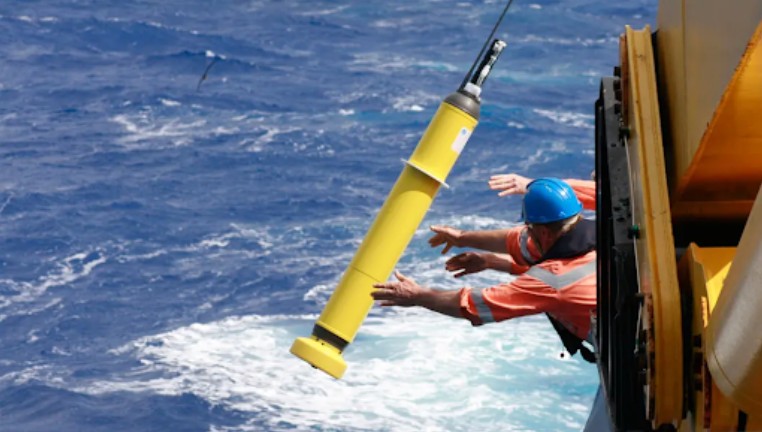
The core evidence comes from arrays of moored instruments strung across the Atlantic, which record temperature, salinity and current speed continuously. Satellites add surface observations, and thousands of drifting floats profile the upper ocean. Agencies such as NOAA help maintain these observing systems, whose value grows with every additional year — a short record can be misread, while a long one can separate a trend from natural variation.
Indirect evidence reaches further back. Sediments, ice cores and historical temperature patterns suggest the circulation may now be weaker than at any point in many centuries, though such reconstructions carry wide error margins and are actively debated in journals including Nature.
Why a slowdown would matter
A weaker conveyor would redistribute heat around the planet. Parts of north-western Europe could see relative cooling or changed storm patterns even as the world warms overall; rainfall belts could shift, affecting agriculture in West Africa and the Americas; and sea level along parts of the North American east coast could rise faster. Our Latest News reporting on climate risks returns often to this theme: global warming does not mean everywhere simply gets hotter in a uniform way, and regional changes can surprise societies that planned for a simple trend.
Fresh water is the suspect
The mechanism scientists watch is fresh water. Melting Greenland ice and increased rainfall add less salty water to the North Atlantic, making surface water lighter and less able to sink — and sinking in the north is what drives the conveyor. Climate models generally project a weakening this century for exactly this reason, though they differ on speed and magnitude, and a complete collapse is considered unlikely in the near term while remaining a high-impact risk that cannot be ruled out.
Watching, because we cannot experiment
There is no laboratory version of an ocean basin. The only strategy is sustained observation, better models and rapid sharing of data across countries — the ships, moorings and satellites are expensive, and their funding is perpetually vulnerable to short-term budget thinking. Scientists argue that this monitoring is among the best-value insurance in climate science: if the conveyor is changing, the world will want as much warning as possible. The race, in other words, is not to stop the ocean changing by observation, but to make sure we are not the last to know.
The observing effort is increasingly international, for the simple reason that no single country can maintain instruments across an entire ocean basin. Research vessels from Europe, North America and Africa service the mooring lines, and the data flow into shared systems within days. That cooperation survived funding squeezes and political tensions because everyone involved understands the alternative: blind spots in exactly the measurements the world can least afford to lose. There is a quiet heroism in the work — technicians hauling instrument lines from deep water in Atlantic weather, year after year, so that a line on a graph can be trusted. The fate of coastlines may turn on whether that line keeps bending, and by how much.
