

Close Menu
JournalNewsInfo
    Facebook X (Twitter) Instagram
    Trending
    • Why Evolution Left the Human Brain Brilliant but Vulnerable
    • A Raccoon Attack, a Course of Rabies Shots and a Bill Cover Would Not Pay
    • Universities and State Labs Scramble as Epidemiology Contract Stalls
    • Jobs, Budgets and the AI Bubble: What the Debate Gets Right
    • Troubleshooting Login Issues
    • Phones Away, Grades Up: What a Huge School Study Reveals
    • Measles Cases Climb Again: A Calm Look at the Numbers
    • Saturn Pulls Further Ahead With 128 Newly Confirmed Moons
    JournalNewsInfoJournalNewsInfo
    Facebook X (Twitter) Instagram
    • Home
    • Tech
    • Business
    • crypto
    • Education
    • Fashion
    • Health
    • Lifestyle
    • More
      • News
      • Home Improvement
      • Entertainment
      • technology
    JournalNewsInfo
    Home»Health

    Why Evolution Left the Human Brain Brilliant but Vulnerable

    Arthur GirardBy Arthur GirardOctober 19, 2026 Health No Comments4 Mins Read
    Facebook Twitter Pinterest LinkedIn Tumblr Email
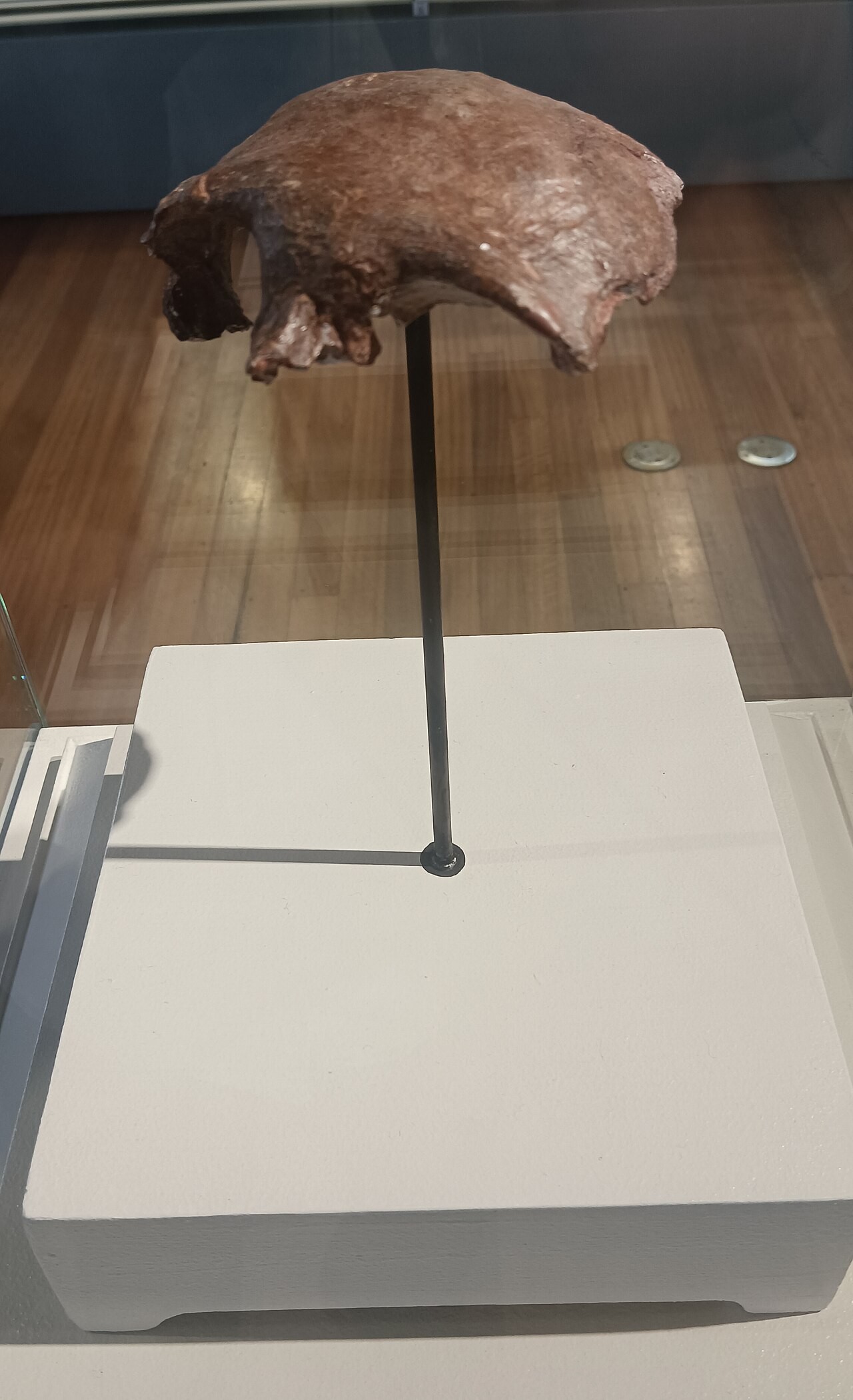
    An ancient human skull cap fossil displayed in a museum

    Evolution does not engineer for perfection; it tinkers toward good enough, under deadline, with spare parts. Nowhere is that clearer than in the human brain. The organ that writes symphonies and lands spacecraft is also prone to anxiety, addiction, back pain’s neurological cousins and a long list of degenerative diseases that other animals largely escape. A growing body of evolutionary neuroscience argues these are not separate facts. The vulnerabilities are the price of the capabilities, charged to the same account — a theme our health and science coverage returns to whenever new fossil or genetic evidence lands.

    Built by expansion, haunted by shortcuts

    The human brain roughly tripled in size over a few million years, an eyeblink in evolutionary time. Rapid expansion favours workable shortcuts: reusing older circuits for new jobs, layering a deliberate cortex over fast emotional machinery, and wiring for social prediction because group survival demanded it. Each shortcut solved an immediate problem and banked a long-term cost. A threat-detection system tuned to err on the side of alarm kept ancestors alive around real predators; in a world of inboxes and headlines, the same bias reads as chronic anxiety. A reward system built to seize scarce calories and opportunities now sits in an environment engineered to exploit it.

    Development adds another compromise. Human brains mature slowly — childhood and adolescence stretch for two decades — which allows extraordinary learning but leaves a long window in which development can be disrupted. Many psychiatric conditions begin in exactly that window, and researchers increasingly read them as disorders of a prolonged, finely timed construction process rather than of a finished machine. The same slow timetable also explains why the adolescent brain is so exquisitely sensitive to sleep loss, stress and social rejection at precisely the age when modern life supplies all three in industrial quantities.

    The ageing problem evolution never had to solve

    Natural selection is a short-term investor. It rewards traits that improve survival and reproduction early in life and is largely indifferent to what happens at seventy. Our brains were therefore never selected for an eighty-year service life, and it shows: protein-clearing systems that cope adequately at forty strain at eighty, blood vessels stiffen, and the same plasticity that made learning possible makes circuits susceptible to the accumulated errors that surface as dementia. The National Institute of Neurological Disorders and Stroke catalogues the resulting diseases in sobering detail — most of them are, in evolutionary terms, problems of a machine outliving its warranty.

    Even our proudest feature carries a surcharge. Language and abstract thought depend on dense, energy-hungry cortical networks; the brain burns about a fifth of our resting energy on two per cent of our body mass. That metabolic extravagance is one reason a brief interruption of blood supply is catastrophic for brain tissue while other organs forgive it.

    What the trade-off view changes

    Reading the brain this way is not pessimism; it redirects effort. If anxiety is a smoke alarm set sensitive on purpose, treatment can aim at recalibration rather than assuming broken machinery. If degeneration reflects maintenance systems never designed for nine decades, then research into clearance, vascular health and sleep — the brain’s housekeeping shift — deserves the priority it is finally receiving, as surveys from institutions like the National Institutes of Health increasingly reflect.

    It also counsels a little humility about self-improvement. You are not failing to operate your brain correctly; you are operating an heirloom — astonishing, improvised, and optimised for a savannah rather than a smartphone. Understanding which of its quirks are features that once kept us alive, and which are costs that have come due, may be the most useful thing evolutionary science currently offers mental health. Follow more science explainers at Journal News Info.

    Brain Science Evolution Mental Health Neuroscience
    Arthur Girard

    Keep Reading

    A Raccoon Attack, a Course of Rabies Shots and a Bill Cover Would Not Pay

    Universities and State Labs Scramble as Epidemiology Contract Stalls

    Measles Cases Climb Again: A Calm Look at the Numbers

    Personalised Cancer Vaccine Shows Early Promise in Ovarian Trial

    Continuous Glucose Monitors Help Type 2 Diabetes Patients Stay in Range Longer

    Are You Wearing Your Posture Corrector Too Long? 

    Leave A Reply Cancel Reply

    Search
    Recent Posts

    Why Evolution Left the Human Brain Brilliant but Vulnerable

    October 19, 2026

    A Raccoon Attack, a Course of Rabies Shots and a Bill Cover Would Not Pay

    October 19, 2026

    Universities and State Labs Scramble as Epidemiology Contract Stalls

    October 18, 2026

    Jobs, Budgets and the AI Bubble: What the Debate Gets Right

    October 18, 2026

    Phones Away, Grades Up: What a Huge School Study Reveals

    October 17, 2026

    Measles Cases Climb Again: A Calm Look at the Numbers

    October 17, 2026

    Saturn Pulls Further Ahead With 128 Newly Confirmed Moons

    October 16, 2026

    Personalised Cancer Vaccine Shows Early Promise in Ovarian Trial

    October 16, 2026
    About Us

    JournalNewsInfo delivers breaking news, deep insights, current events, politics, business, technology, trends, and analysis.

    Covering important stories with clarity and accuracy, providing readers with up-to-date information and expert perspectives. #JournalNewsInfo

    Facebook Instagram YouTube LinkedIn TikTok
    Popular Posts

    Why Evolution Left the Human Brain Brilliant but Vulnerable

    October 19, 2026

    A Raccoon Attack, a Course of Rabies Shots and a Bill Cover Would Not Pay

    October 19, 2026

    Universities and State Labs Scramble as Epidemiology Contract Stalls

    October 18, 2026

    Jobs, Budgets and the AI Bubble: What the Debate Gets Right

    October 18, 2026

    Phones Away, Grades Up: What a Huge School Study Reveals

    October 17, 2026
    Contact Us

    We welcome your feedback and inquiries at JournalNewsInfo. Whether you have a news tip, an advertising request, or need support, feel free to reach out.

    Email: contact@outreachmedia .io
    Phone: +92 3055631208
    Facebook: Outreach Media

    Address:4618 Boring Lane
    San Francisco, CA 94108

    สล็อตวอเลท | แทงบอลออนไลน์ | ufabet | ufabet | ufa888 | ทางเข้าufabet | สล็อตเว็บตรง | แทงบอลออนไลน์ | บาคาร่า | บาคาร่า |  แทงบอลออนไลน์ | หวยออนไลน์ | ยูฟ่าเบท | แทงบอล | สล็อต | UFA365 | คาสิโนออนไลน์ | Caliente Casino | AlgorynMunt Group | บาคาร่า | หวยออนไลน์ | สมัคร ufabet | บาคาร่า | แทงบอลโลก 2026 | https://keonhacai.mba/ | เว็บสล็อต | สล็อตเว็บตรง |สมัคร ufabet | ufa

    • About Us
    • Contact Us
    • Disclaimer
    • Privacy Policy
    • Terms and Conditions
    • Write For Us
    • Sitemap

    Copyright © 2026 | All Right Reserved | JournalNewsInfo

    Type above and press Enter to search. Press Esc to cancel.

    WhatsApp us