


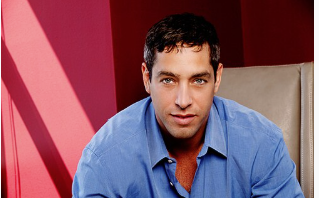
In an era defined by convergence between media, commerce, and climate-conscious enterprise, few figures illustrate this intersection better than Nicholas Mears Loeb. As companies across industries face increasing pressure to innovate while addressing social and environmental responsibilities, Loeb represents a rare example of a professional who has navigated multiple high-profile sectors with equal intensity.
From the studios of Hollywood to the boardrooms of finance, and from entrepreneurial ventures in sustainable products to political engagement, Loeb’s trajectory reflects both the opportunities and challenges of operating at the crossroads of culture, business, and public policy.
Nicholas Loeb grew up in a world shaped by diplomacy and international affairs. His father served as the United States Ambassador to Denmark from 1981 to 1983 and later represented the country as a Delegate to the United Nations in 1984. Loeb’s parents divorced when he was just a year old, and he was raised largely by his father on New York City’s Upper East Side, surrounded by the rhythm of Manhattan’s elite schools and social circles.
His childhood included stretches abroad, most notably three years in Denmark during his father’s posting, experiences that gave him an early window into global cultures and politics. He attended the Collegiate School in Manhattan and later the Loomis Chaffee School, eventually earning a Bachelor of Arts in management and finance in 1998.
Amid these formative experiences, Loeb endured a personal tragedy that would leave a lasting impact: in 1996, his mother took the lives of her third husband and herself, an event that Loeb has described as deeply formative, shaping the resilience and perspective he would carry into adulthood.
And then, years later, after the tragedy that marked his youth, Loeb entered the entertainment industry, carving out a space for himself in Hollywood through both ambition and opportunity. With family connections at Universal Studios, he gained early experience on major film sets, including working with the acclaimed director Mike Nichols on the political comedy Primary Colors. He soon moved beyond supporting roles behind the camera, producing and acting in the independent film The Smokers, which starred Dominique Swain, Thora Birch, and Busy Philipps. His curiosity for storytelling expanded into documentary work, producing the PBS series The Living Century alongside Barbra Streisand, a project that explored the lives of centenarians across the United States.
Over time, Loeb continued to develop his craft, taking on roles in The Brawler in 2019, portraying boxer Donnie Wepner, and in the 2020 historical drama Roe v. Wade, where he not only acted as Bernard Nathanson but also co-directed, co-produced, and co-wrote, demonstrating a rare blend of creative and executive vision.
After his initial success in media, Loeb transitioned to finance and sustainable business. He worked with Lehman Brothers before founding Carbon Solutions America, a consulting firm that provides climate change advisory services to corporate and government clients. Loeb claims to have played a role in producing the country’s first carbon-neutral wine, highlighting a focus on environmental accountability within the beverage industry.
Loeb’s involvement in politics and public service has been intermittent but notable. In 2005, he ran for the Delray Beach city commission in Florida but was not elected. He later served as finance co-chairman for Rudy Giuliani’s 2008 presidential campaign. Loeb considered a state Senate campaign in 2009 but withdrew due to personal circumstances, including a divorce that followed legal challenges involving his ex-wife. In 2011, he decided against a run for the United States Senate, citing health complications stemming from injuries sustained in a 2010 car accident. Loeb identifies politically as a Teddy Roosevelt Republican, signaling an approach grounded in reformist principles and personal accountability.
Entrepreneurship in the food sector became a prominent facet of Loeb’s career. He founded Loeb’s Foods in 2006 and, in 2011, launched the Crunchy Condiment Company. The company’s signature product, Onion Crunch, a fried onion topping, has grown into a retail success with distribution in more than 17,000 locations nationwide. These ventures demonstrate Loeb’s capacity to translate innovative ideas into consumer products that meet the demands of a competitive market.
In addition to his business and political ventures, Loeb has taken steps to restore historical titles of nobility. In 2019, he rehabilitated the title of 1st Marquis of Cañada Tomás López Marín y González de Poveda and the Count of San Pascual Bailon, José de Querejazu y Santiago Concha, alcalde de Lima.
These titles have been passed on to his son, Jackson Ciro Loeb, who now holds the title of 7th Marquis of Canada Hermosa.
Through every chapter of his life, Nicholas Loeb has moved between worlds that rarely overlap, from Hollywood sets to Wall Street boardrooms to sustainable business ventures.