


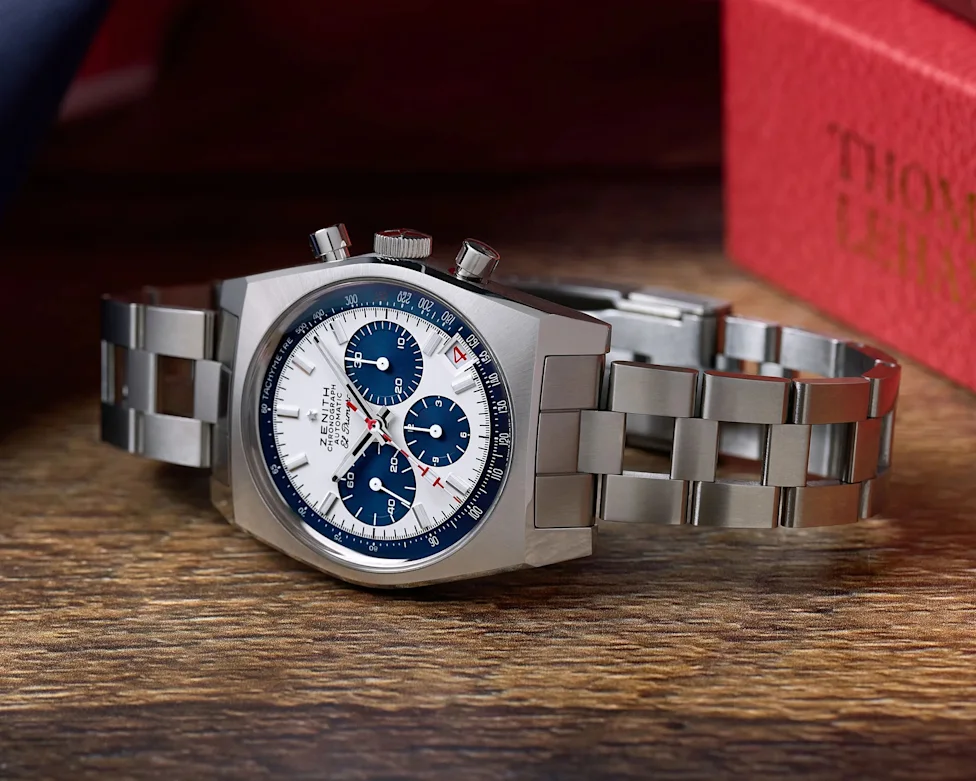
The vintage watch market is a lot like the fine art world, but with significantly more gears and a strange obsession with the exact font size of a single letter on a dial. For years, conventional wisdom dictated that if you wanted a truly collectible luxury chronograph, you had to look exclusively at the manually wound timepieces of the mid-twentieth century. Collectors used to turn up their noses at the mention of automatic, self-winding stopwatches, viewing them as too modern or too utilitarian to carry real romantic value. However, a major generational shift has occurred, and the global collecting community has collectively fallen in love with a highly specific, transitional window of horological history.
The late 1980s through the end of the 1990s represents a spectacular golden era for high-end luxury watchmaking. This was the precise moment when the traditional Swiss watch industry emerged victorious from the devastating quartz crisis, re-establishing itself not just as a creator of functional timepieces, but as the ultimate purveyor of mechanical art. At the absolute center of this cultural renaissance were the legendary mid-to-late-90s automatic chronographs powered by heavily modified, historic calibers. These fascinating timepieces bridge the gap between vintage charm and modern reliability, offering an irresistible charm that has made them the most aggressively hunted watches on the secondary market.
The Historic Heart of the El Primero Caliber
To understand why these late-90s machines command such immense respect from seasoned horological experts, you have to understand the dramatic history ticking away beneath their sapphire crystals and solid metal case backs. In 1969, a legendary Swiss manufacturer unveiled the El Primero caliber, widely considered the world’s first integrated, high-frequency automatic chronograph movement. It was a mechanical triumph, beating at an astonishing thirty-six thousand vibrations per hour, which allowed it to measure elapsed time with incredible split-second accuracy.
When the quartz revolution temporarily crushed the demand for mechanical watchmaking, production of this legendary caliber was ordered to be completely destroyed. In a move that sounds like the plot of a Hollywood thriller, a lone watchmaker secretly hid the blueprints and specialized heavy stamping tools in a factory attic, saving the movement from extinction. By the time the late 1980s arrived and the world remembered why mechanical luxury watches are superior, this resurrected caliber became the absolute holy grail of mechanical engine architecture, prompting the world’s elite luxury brands to knock on their door for a steady supply of premium movements.
The Birth of a Modern Myth and the Modified Architecture
When the premier Swiss luxury giants decided to launch their very first automatic, self-winding luxury chronograph sports lines, they knew they needed an engine that could live up to their uncompromising standards. Rather than developing a movement from scratch, which would have taken a decade, they sourced the legendary high-frequency caliber and subjected it to an intensive, top-secret customization process that altered its DNA entirely.
A spectacular monument to this era of high-end cross-pollination is the late-90sRolex Daytona, often referred to by collectors as the Zenith Daytona. Master watchmakers famously discarded roughly fifty percent of the original movement components, replacing them with custom-engineered parts to optimize performance. They slowed the beat rate down to a more traditional twenty-eight thousand eight hundred vibrations per hour to extend the service intervals, added a sophisticated Breguet overcoil hairspring, and removed the date function entirely to achieve absolute dial perfection. The result was a spectacular, bulletproof hybrid machine that offered the rugged durability of modern engineering alongside the hand-finished soul of a vintage caliber.
The Perfect Evolution of Case Dimensions and Visual Style
Aside from the mechanical romance ticking inside the case, late-90s automatic chronographs have taken over the collecting world because they possess the ultimate physical proportions. Prior to this era, vintage chronographs were often beautifully delicate but felt somewhat fragile on a daily basis, featuring acrylic crystals that scratched if you breathed on them too hard. The models of the 1990s introduced ultra-hard, scratch-resistant sapphire crystals, robust screw-down pushers, and beautifully sculpted crown guards.
Crucially, these pieces achieved this modern durability without succumbing to the oversized case trends that dominated the early 2000s. A classic late-90s automatic chronograph typically measures a wonderfully modest forty millimeters in diameter with a beautifully slim case thickness. This allows the watch to hug the wrist perfectly, offering a commanding visual presence without ever looking bulky or feeling top-heavy. The sub-dials on these pieces are frequently framed by contrasting metallic rings, a stylistic detail that has aged into a gorgeous, warm patina over the last three decades, giving each surviving watch a completely unique personality.
The Allure of Rarity in Transitional Production Windows
In the realm of high-stakes watch collecting, rarity is the ultimate driver of value, and the late-90s automatic chronographs are packed with fascinating production anomalies. Because this was a transitional period, luxury brands were constantly tinkering with materials, dial suppliers, and luminous compounds. Within a single reference number run from this era, you can find a mind-boggling array of micro-variations that keep collectors up all night researching online forums.
For example, the mid-to-late 90s saw the industry transition away from radioactive tritium lume toward a safer, photoluminescent material called Luminova. Watches produced during this brief, multi-year window often feature rare dials marked with Swiss Only or T Swiss Made T insignias that do not match the actual material on the markers. Additionally, some dials from this specific era featured organic lacquer finishes that reacted unexpectedly to UV light, causing black sub-dials to slowly shift into a rich, chocolate-brown espresso tone. Finding one of these untouched, transitional specimens is like finding a hidden treasure chest, and their values have soared as a direct result.
Finding Your Vintage Horological Holy Grail at OMI Jewelry
Navigating the complex, high-stakes market of late-90s automatic chronographs requires a tremendous amount of specialized knowledge and absolute trust. Because these transitional pieces are highly coveted and feature so many micro-variations, it is absolutely essential to partner with an established, premier dealer who understands the precise history, hallmark locations, and movement configurations of these iconic machines.
At our boutique, we are deeply passionate about sourcing, authenticating, and preserving the finest examples from this legendary chapter of watchmaking history. Every single vintage timepiece that enters our curated vault undergoes an exhaustive multi-point diagnostic inspection to ensure absolute originality and optimal mechanical health. If you are ready to add the unmatched character of a late-90s automatic chronograph to your personal rotation, we would be honored to guide you through our exceptional inventory. To discover our magnificent collection and speak with our resident watchmakers, you can easilyLocate our premier showroom on Google Maps to plan your visit today. Let us help you secure a spectacular, investment-grade masterpiece that represents the absolute peak of mechanical chronograph history.
