


The performance of an iPhone’s battery reduces over time, which can lead to problems such as rapid battery drain, unexpected shutdowns, or the device not turning on at all. When these issues appear, users often face two key questions: Should they choose professional repair services or attempt a DIY repair, and what tools are required to complete the process safely?
The answer depends on the user’s technical ability and access to proper tools. With the rapid growth of the mobile repair industry, both individual users and professional technicians are increasingly relying on specialized tools to handle battery-related problems. According to Phonefix, using the correct tools is essential for ensuring safe and accurate iPhone battery repair.
Overview of iPhone Battery Repair Tools and Industry Demand
The increasing use of smartphones has led to a strong demand for repair services. Today, the repair market includes individual users who prefer to fix their own devices, as well as professional technicians and repair shops that handle more complex issues. This wide customer base has made repair tools an essential part of the industry.
Using proper tools is especially important when working on iPhones. Their internal structure is compact and delicate, which means that even a small mistake can cause damage. Without the right tools, users may face problems such as damaged components, safety risks, or failed repairs. This is why selecting a reliable iPhone battery repair tool is a basic requirement before starting any repair work.
A complete iPhone repair kit provides the necessary tools to carry out the repair process efficiently. These kits are designed to support both beginners and professionals by offering all essential equipment in one place.
Key tools commonly included in a repair kit:
- Pentalobe screwdriver (P2) for bottom screws
- Phillips #000 screwdriver and Tri-point (Y000) screwdriver for internal components
- Plastic spudger and opening picks for safe disassembly
- Suction cup tool for lifting the screen
- Heat gun or heating pad for loosening adhesive
- Tweezers for handling small parts
- Magnetic mat for organizing screws
These tools help ensure that the repair process is controlled, safe, and accurate.
Technical Explanation of Battery Activation Boards
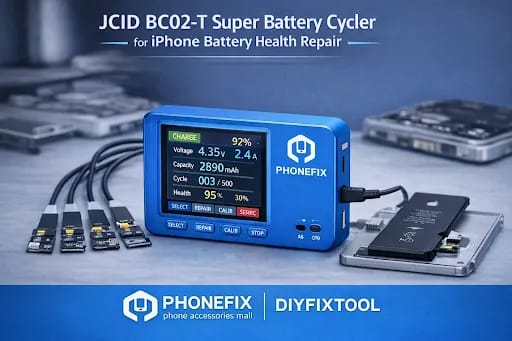
In addition to basic tools, some repair situations require more advanced equipment. One such tool is the iPhone battery activation board for iPhone, which is mainly used in professional repair environments.
An activation board is designed to test and activate batteries during the repair process. This is particularly important because modern iPhones use systems that monitor battery condition and authenticity. If a battery is not properly recognized, the device may show incorrect battery health information, display warning messages, or fail to perform as expected.
To solve these issues, the activation board plays a critical role in improving repair accuracy and reliability.
Main functions of an activation board include:
- Testing the actual condition of the battery
- Activating inactive or replacement batteries
- Fixing battery recognition issues
- Supporting accurate diagnostics during repair
Because of these functions, it is widely used by technicians and repair shops for advanced repair tasks.
Practical Repair Approach and Tool Application
Step-by-Step iPhone Battery Repair Process
Before starting any repair, it is important to confirm whether the battery is actually the cause of the problem. Users can do this by checking the battery health in the device settings, observing unusual power consumption, and reviewing the overall performance of the phone. This step helps avoid unnecessary repairs.
Once the issue is confirmed, the repair process follows a structured approach. The device should first be powered off, and then opened carefully using tools such as a suction cup and plastic picks. Heat is applied along the edges to soften the adhesive, making the screen easier to lift without damage.
Battery Replacement and Tool Usage
After opening the device, internal screws are removed using precision screwdrivers, and the battery connector is carefully disconnected. The old battery is then removed, often by gently pulling the adhesive strips. A new battery is installed, and all components are reassembled in order. Finally, the device is powered on and tested to ensure proper function.
During this process, each tool plays a specific role. Repair tools ensure safe handling of components, while the activation board helps confirm that the battery is working correctly. Using the correct tools improves both safety and repair success.
At this stage, users often ask whether DIY repair is the right choice. The answer is that DIY repair can be suitable for individuals who have basic technical knowledge and access to proper tools. However, for more complex issues or newer iPhone models, professional repair services are usually the safer option.
Advice
iPhone battery repair requires careful handling, proper tools, and a clear understanding of the repair process. Whether the repair is carried out by an individual user or a professional technician, the quality of the tools used has a direct impact on the final result.
To achieve safe and reliable repairs, it is important to use high-quality tools, including complete repair kits and advanced equipment such as activation boards. Choosing trusted sources such as China Phonefix can help ensure better performance, improved safety, and more consistent repair outcomes.